Friday, 14 August 2020

Creationtide 2020


Every year at St John’s Church, Princes Street, Edinburgh we celebrate Creationtide, from the 1st of September till Harvest Festival. This is usually about the same time as the Feast of St Francis. Our theme this year is Nature and Wellbeing. To go with this we have selected a number of short quotations on that theme. You will notice that we have taken only one quotation from each author; even William Wordsworth and St Francis himself. We hope that these, with the accompanying photos, may help you to reflect thankfully and beneficially upon the wonder of nature. Some of the extracts are intended to provoke thought.

September 1

Saint Matthew, Gospel, Chapter 6 verses 28 and 29: Consider the lilies of the field, how they grow. They toil not, neither do they spin. And yet I say unto you, that even Solomon in all his glory was not arrayed like one of these.


September 2

John Ruskin, Letters to the Workmen and Labourers of Great Britain:  Your garden is to enable you to obtain such knowledge as you may best use in the country in which you live by communicating it to others; and teaching them to take pleasure in the green herb, given for meat, and the coloured flower given for joy.


September 3

Konrad Lorenz, King Solomon’s Ring: The whole charm of childhood still lingers, for me, in such a fishing-net… With such an instrument, I caught, at the age of nine, the first Daphnia for my fishes, thereby discovering the wonder-world of the freshwater pond which immediately drew me under its spell. In the train of the fishing-net came the magnifying glass; after this again a modest little microscope, and therewith my fate was sealed; for he who has once seen the intimate beauty of nature cannot tear himself away again. He must become either a poet or a naturalist.


September 4

Roger Deakin, Wildwood: A Journey through trees: I live beneath the protective boughs of a sheltering ash. The tree springs up as a single trunk of nine-foot girth for five feet and then divides into three, each of its branched trunks four feet in girth arching high above me. I love its natural flamboyance and energy, and the swooping habit of its branches; the way they plunge towards the earth, then upturn, tracing the trajectory of a diver entering the water and surfacing.


September 5

Simon Schama, Landscape and Memory: Arguably both kinds of Arcadia, the idyllic as well as the wild, are landscapes of the urban imagination…The quarrel even persists at the heart of debates within the environmental movement, between the deeper and paler shades of Greens… You would never know it from the languid nymphs and shepherds that populate the pastoral landscapes of the Renaissance, but the mark of the original Arcadians was their bestiality. Their presiding divinity, Pan, copulated with goats and betrayed his own animal nature in his woolly thighs and cloven feet.


 September 6

Gerard Manley Hopkins, Spring

                                Nothing is so beautiful as Spring –

                                   When weeds, in wheels, shoot long and lovely and lush;

                                   Thrush’s eggs look little low heavens, and thrush

                                Through the echoing timber does so rinse and wring

                                The ear it strikes like lightnings to hear him sing;

                                   The glassy peartree leaves and blooms, they brush

                                   The descending blue; that blue is all in a rush

                                With richness; the racing lambs too have fair their fling.

                                What is all this juice and all this joy?

                                   A strain of earth’s sweet being in the beginning

                                In Eden garden.


September 7

Oliver Rackham, The History of the Countryside: Gamekeepers kept alive (as they still do) many otherwise disused woods that might have been grubbed out; they also kept up the coppicing. But they took it upon themselves to persecute beasts and birds of prey and to exclude the public from the woods. This need not have been so. France, Germany, and Switzerland are equally good shooting countries, and yet ancient woods are everyone’s heritage; in Britain alone we have lost that birthright, and with it our knowledge and love of woods.


September 8

Dorothy Wordsworth, Journal November 8th 1802: A beautiful day. William got to work again at Ariosto, and so continued all the morning, though the day was so delightful that it made my very heart linger to be out of doors, and see and feel the beauty of the autumn in freedom.


September 9

Keith Thomas, Man and the Natural World: Changing attitudes in England 1500-1800: The modern idea of the balance of nature thus had a theological basis before it gained a scientific one. It was belief in the perfection of God’s design which preceded and underpinned the concept of the ecological chain, any link of which it would be dangerous to remove.


September 10

Geoffrey Winthrop Young, A Hill:

                                Climb but a little hill: you too may find

                                The clouds ebb surely from your clearer mind.


September 11

Sir Walter Scott, The Heart of Midlothian: They landed in this Highland Arcadia, at the mouth of a small stream which watered the delightful and peaceable valley… Far to the right were seen the dusky and more gigantic mountains of Argyleshire, with a seaward view of the shattered and thunder-splitten peaks of Arran. But to Jeanie, whose taste for the picturesque, if she had any by nature, had never been awakened or cultivated, the sight of the faithful old May Hettley, as she opened the door to receive them, was worth the whole varied landscape.


September 12

Richard Hamblyn, The Cloud Book: As will have been apparent during the course of this book, clouds often play a valuable role in indicating short-range weather conditions, but when it comes to predicting longer-term climate changes, they are entirely unknown quantities.


September 13

Homer, The Odyssey (Calypso’s Isle):

                                Four springs in a row, bubbling clear and cold,

                                Running side-by-side, took channels left and right.

                                Soft meadows spreading round were starred with violets,

                                Lush with beds of parsley. Why even a deathless god

                                Who came upon their place would gaze in wonder.


September 14

Leonardo da Vinci, The Artist’s course of study: Nature is so delightful and abundant in its variations that among trees of the same kind there would not be found one which nearly resembles another, and not only the plants as a whole, but among their branches, leaves and fruit, will not be found one which is precisely like another.


September 15

George Basterfield, The Harebells of Mosedale:

                                Twenty desolate harebells

                                  Playing a modest part,

                                Chime a tender sweetness

                                  Down in a climber’s heart.


September 16

David Blackbourn, The Conquest of Nature: Water, Landscape and the Making of Modern Germany: The brave new world of dykes, ditches, windmills, fields and meadows, a landscape of “wealth and almost Dutch cleanliness”, delivered many undeniable benefits [to Oderbruch]...It is harder today to summon up unqualified enthusiasm, which passes over the costs of that conquest… The inhabitants, no more than 170 families in the Bruch proper, were amphibious. They lived primarily as fishermen… For much of the year, except during low water and winter ice, their only means of communication through the labyrinthine waterways was by flat-bottomed boat. This way of life was destroyed.


September 17

William Dunbar, Of the Nativitie of Christ:

                                Sing, hevin imperial, most of hicht,

                                Regions of air, make armony!

                                All fish in flude, and fowl of flicht,

                                Be mirthful and make melody!

                                All, Gloria in excelsis cry –

                                Hevin, eard, sea, man, bird and best –

                                He that is crownit abone the sky

                                Pro nobis puer natus est.


September 18

John Lewis-Stempel, The private life of an English field – Meadowland: My daughter’s school carol service, in Hereford Cathedral… Later that night, I go down to the field, and stand there in the vertiginous dark, with the lights of the stars above me. The mountains make for high walls, the stars for candles. There is no difference between the cathedral and the field.


September 19

Geoffrey Chaucer, The Canterbury Tales:

                                Whan that Aprill with his shoures soote

                                The droghte of March hath perced to the roote,

                                And bathed every veyne in swich licour

                                Of which vertu engendred is the flour;

                                Whan Zephirus eek with his sweete breeeth

                                Inspred hath in every holt and heeth

                                The tender croppes, and the yonge sonne

                                Hath in the Ram his halve cours yronne,

                                And small foweles maken melodye,

                                Thanne longen folk to goon on pilgrimages.


September 20

Thomas Traherne, The First Century, number 28: Your Enjoyment of the World is never right, till evry Morning you awake in Heaven: see your self in your father’s Palace: and look upon the Skies and the Earth and the Air, as Celestial Joys.


September 21

George Orwell, Some thoughts on the Common Toad: I think that by retaining one’s childhood love of such things as trees, fishes, butterflies and toads, one makes a decent future a little more probable…At any rate, spring is here, even in London N.1., and they can’t stop you enjoying it…How many times have I watched toads mating, or a pair of hares having a boxing match in the young corn, and thought of all the important persons who would stop me enjoying this if they could. But luckily they can’t.


September 22

Alfred Wainwright, The Northern Fells: Book Five is dedicated to those who travel alone, the solitary wanderers on the fells, who find contentment in the companionship of the mountains and of the creatures of the mountains.


September 23

Christopher North, The Angler’s Tent:

                                The mountains ring: Oh! what a joy is there!

                                As hurries o’er their heights in circling dance,

                                Cave-loving Echo, Daughter of the Air.


September 24

Gilbert White, The Natural History of Selborne: Echo has always been so amusing to the imagination, that the poets have personified her; and in their hands she has been the occasion of many a beautiful fiction. Nor need the gravest man be ashamed to appear taken with such a phenomenon, since it may become the subject of philosophical or mathematical enquiries.


September 25

John Buchan, Memory Hold-the-door: Wood, sea and hill were the intimacies of my childhood, and they have never lost their spell for me. But the spell of each was different. The woods and beaches were always foreign paces, in which I was at best a sojourner. But the Border hills were my own possession, a countryside in which my roots went deep…This attachment to a corner of earth induced a love of nature in general.


September 26

William Blake, Laughing Song:

                                When  the green woods laugh with the voice of joy

                                And the dimpling stream runs laughing by,

                                When the air does laugh with our merry wit,

                                 And the green hill laughs with the noise of it.


September 27

Beatrix Potter, The Fairy Caravan: Tuppenny ran and ran, splashing through the puddles with little bare feet… Tuppenny felt like a new guinea-pig. For the first time he smelt the air of the hills. What matter if the wind were chilly; it blew from the mountains… The short-cropped turf would soon be gay with wild flowers; even in early April it was sweet. Tuppenny felt as though he could run for miles.


 September 28

G.M. Trevelyan, Preservation of the Scenery: The happiness and the soul’s health of the whole people are at stake. The preservation of natural beauty as an element in our nation’s life is a cause that deeply concerns people of every sort who are working to maintain any ideal standards and any healthy life… If natural beauty disappears, religion, education, national tradition, social reform, literature and art, will all be deprived of a principal source of life and vigour.


September 29

Daniel Defoe, The Borders of Lancashire and Westmoreland: Here we entered Westmoreland, a country eminent only for being the wildest, most barren and frightful of any that I have passed over in England, or even in Wales it self; the west side, which borders on Cumberland, is indeed bounded by a chain of almost unpassable mountains, which in language of the country are called Fells.


September 30

Anon, Robin Hood and the Monk

                                In somer, when the shawes be sheyne,

                                And leves be large and long,

                                Hit is full mery in feyre foreste

                                To here the foulys song.


October 1

Arthur Ransome, The Picts and the Martyrs: Dick became interested from another point of view. “Like natural history,” he said. “There’s no good in hating wasps because they sting. What matters is to understand how they do it. It works both ways. When you understand you don’t mind so much, even if it’s you who gets stung. Like that mosquito. I forgot how beastly he was when I was watching him and saw him uncurl his proboscis and shove it in and start sucking blood up out of the back of my hand… Of course it was scratchy afterwards just the same.”


October 2

Isaac Walton, The Compleat Angler: My honest scholar, all this is told to incline you to thankfulness; and to incline you the more, let me tell you, and though the prophet David was guilty of murder and adultery, and many other of the most deadly sins, yet he was said to be a man after God’s own heart because he abounded more with thankfulness than any other that is mentioned in Holy Scripture… Let us not forget to praise him for the innocent mirth and pleasure we have met with since we met together. What would a blind man give to see the pleasant rivers, and meadows, and flowers that we have met with since we met together?
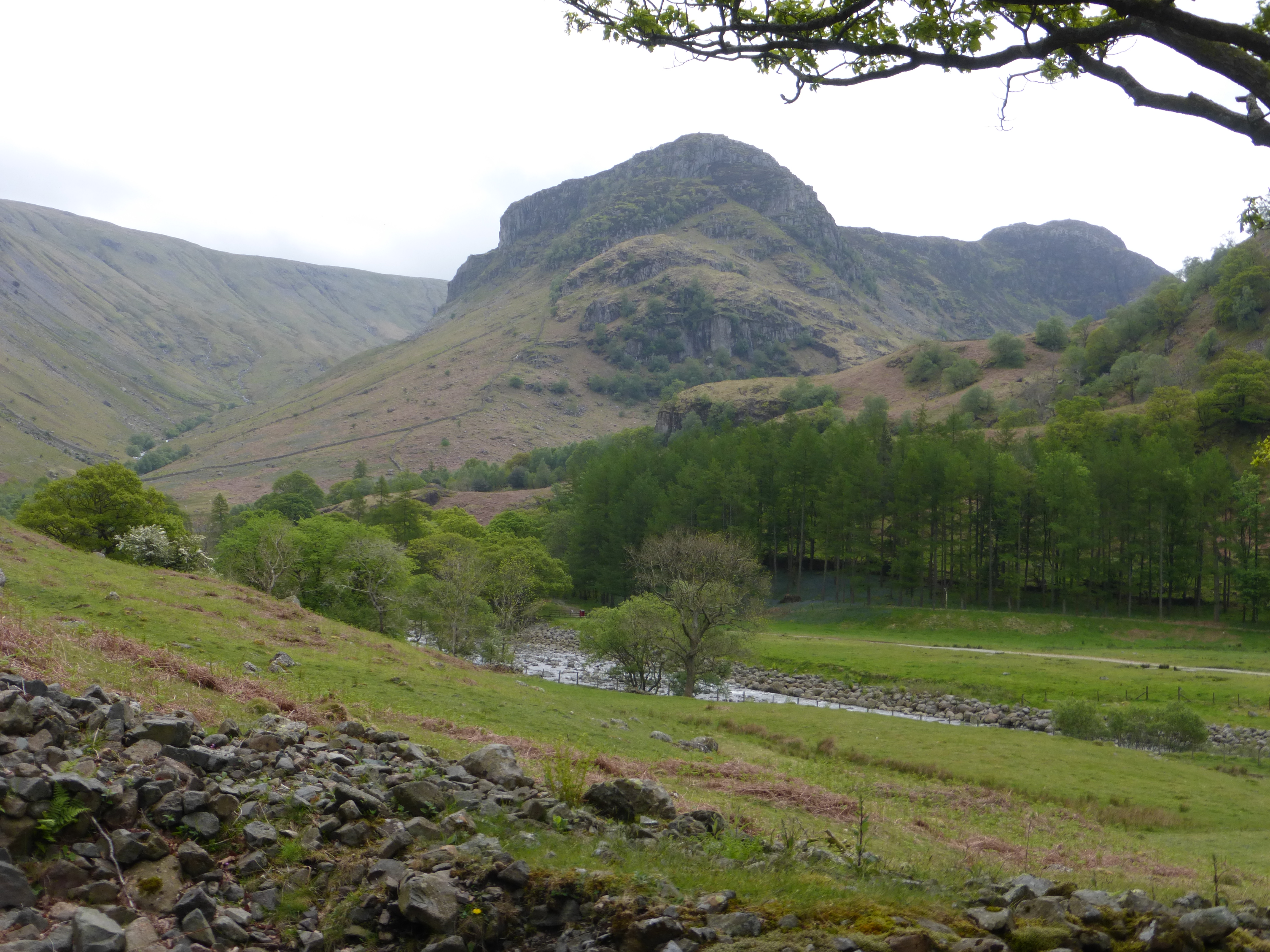


October 3

William Wordsworth, Ode – Intimations of Immortality from Recollections of Early Childhood

                                Thanks to the human heart by which we live,

                                Thanks to its tenderness, its joys, and fears,

                                To me the meanest flower that blows can give

                                Thoughts that do often lie too deep for tears.


October 4

Saint Francis, Cantico delle creature

                                Laudato si’, mi Signore, per sora nostra matre terra,

                                La quale ne sustena et governa

                                Et produce diversi fructi con coloriti fiori et herba.

[Be praised , Lord, for sister our mother earth, who maintains and governs us and puts forth different fruits with coloured flowers and grass.]


Wednesday, 12 August 2020

History Pieces Free on Kindle 13th August to 9th September


My various Kindle pieces will be free on the following days. Usually I will post the link on the day; some days I will not be at home to do this, but it should be easy enough to find the piece if you wish to.


August

13     Scotland and the Causes of the First World War

14     The Protestant Reformation briefly explained

15     Why did the Allies win the Second World War?

16     The Jacobites

17     The Congress of Vienna Reassessed

18     The Cold War

19     The Curse of Donald Bane

20     The “Glorious” Whig Revolution: 1670-1720

21     Socialism and the Early Years of the British Labour Party

22     The Place-names of Scotland: A First Introduction

23     The Unification of Italy

24     Cockburn’s Edinburgh

25     The Great Liberal Reforms 1906-1914

26     James IV: Scotland’s Renaissance King

27     The Causes and the Course of the First World War

28     The Baker Street Irregulars

29     The Development of Democracy in Britain 1850-1918

30     An Introduction to the Scottish Enlightenment

31     Getting to Know Edinburgh

September

1     Three Wise Men

2     Bismarck and the Making of the German Empire

3     Bonnie Dundee and the First Jacobite Rebellion

4     Slavery and the Causes of the American Civil War

5     Hitler’s Rise to Power

6     An Introduction to the Renaissance

7     Votes for Women!

8     The Causes of the Second World War and Appeasement

9     The Russian Revolution of 1917

Wednesday, 24 June 2020

The Curse of Donald Bane


This is the first play I wrote, in the early 1980s. I have been able to use the lock-down to get it typed up neatly and published on Kindle. Here is the link to it.


The play was written as part of teaching, for a Primary 7 class, so do not expect an adult treatment. But I do not believe in writing down for children, so it is not “childish”, however you may define that. Because we were making use of a lot of classroom time, and I was not yet Head of Department to do whatever I would, the play covers a lot of medieval history. The feudal system, outlawry, monastic reform, Scottish power politics of the twelfth century, Norman influence, royal government and the founding of the Royal Burgh of Edinburgh are all part of the story.

So anxious was I that the play could be used to teach a little medieval history, there are footnotes – sometimes extracts from primary sources – showing how the various events are closely based on historical record. It also makes clear which characters are invented by me and which ones definitely existed.

In those days our school was all boys (except for the Sixth Form) and in any case books about the twelfth century in those days did not deal enough with women. So the characters are all male. This does not, of course, prevent girls enjoying it, or taking part in it if you want to arrange a read-though. Half the point of acting is that you play someone different from the person you really are.

I realised, while typing it up, that the story of one boy coping with rapid changes in his society is a treatment that owes something to my childhood reading of Rosemary Sutcliff. I see nothing to be ashamed of in that; rather the reverse. The target audience originally was parents. I suppose the target readership is ages 9-12. But unless you are reasonably well up on the reign of David I it is likely to contain some Scottish history that is new to you.

Everyone who knows Shakespeare’s “Macbeth” will remember Donalbain, the younger brother of Malcolm who says “To Ireland I” and disappears from the play.  He is the Donald Bane of the title. I have seen his name spelled Donald Bain and Donald Ban. I am sure that Gaelic speakers may dispute all these spellings. All I can do is refer you to the introduction to “The Seven Pillars of Wisdom” by T.E. Lawrence where he challenges those who criticise his transliterations of Arabic names.  

Friday, 5 June 2020

Suggested reading for young (11-14) historians


There was a tweet the other day asking for recommendations of reading for a Year 8 pupil who has an interest in history that might be developed, encouraging future study. As it happens this is a subject very close to my heart, so rather than suggest a few titles I thought I would write a blog-post about it. If it helps anyone – great. If it doesn’t there is no harm done.

When I was head of a history department one of the things I set up for our three youngest years (P7, S1 and S2; I think that is Years 7,8 and 9 in England) was a History Reading Book Scheme. All the pupils were encouraged (and a fair amount of official time was provided) to have a History Reading Book. I used to say to classes: “The most important rule is that you must enjoy it. You are forbidden to read a book you don’t like”. This was reinforced by the occasional prep, cover lessons when I was away, ten minutes at the start of a lesson, something for the fast workers while the steadier ones caught up. I have no doubt it worked – not, maybe for improving league table performance (who cares?) but for education. Once a year there was some sort of written work based on what they had read.

To provide these pupils with books I had three routes.
          The school library. I made a list of books I thought they might enjoy.        
      Our own shelves. I lived in a city rich in charity shops, so it was easy to nip out and come back with a sack of children’s books for very little money.     
          “Choose your own. Ask me if it will be OK.”

Three big problems with recommending history reading were usually avoided by this “Free choice, but you must enjoy it” approach.
(    1.     The wide disparity in reading ages and reading abilities. Some 13 year-olds are enjoying Dickens. Some are slowly working though the Famous Five.
      2. The wide range of taste, both in children and adults. Some prefer colourful, imaginative history. Some prefer unadorned fact. Both can be good; both can be off-putting for those who don’t like them.
(     3.  Political correctness. It is almost impossible to read a book that was written more than 100 years ago without encountering snobbery, sexism, racism, imperialism etc that would rightly be unacceptable today. If the book is old, I think that is OK. Part of growing up as a historian is becoming aware that people in the past might well be intelligent and public spirited by any measure, but nevertheless had views we find wrong. With recent books it is more tricky. I hope I would steer children way from recent books that avowed the opinions listed above – but what about nationalism, creationism, sexual freedom? I don’t know your views on these; you don’t know mine. At some point you have to let go and let children read and think for themselves; with younger children you do want to shape their thinking and protect them from the opinions you find bad.

So far so good. That was my method at school and, I think, with my own children. What about specific titles?

Here I cannot help but be autobiographical. You will find my suggestions limited and lacking for two reasons. One is that I am very old (officially “vulnerable”) so many of my suggestions come from previous generations. Secondly, when I retired ten years ago I left all my “reading books” and lists at school, so I may not remember titles and authors.  However: here goes.

No historian reads historical novels to learn history. But for the child they can be a stimulating way in to the past. The correct thing is to say: “I liked that book. I wonder what really happened” – and then go on to study the history. This studying of the history may take a life-time, but that, remember, was the point of the original question. I am currently enjoying reading “The Midnight Folk” (John Masefield) and “Merlin’s Magic” (Helen Clare) with my grandchildren. They are for younger readers than we have in mind here, but they are both very good books, stuffed with history as well as fantasy. A book like Rosemary Sutcliff’s “The Shield Ring” is a very fine book – but the mixture of accurate history and invention in the plot is inextricable for a child reader; but what an inspiration to delve deeper into the Norman Conquest and into the Viking world. “The Silver Sword” (Ian Serrallier) is very good indeed – but how many real stories like that in the War did not end happily?

 I still enjoy C S Forester’s “Hornblower” books that I enjoyed when I was about 12/13. For history other than ship-board life, “Hornblower and the Atropos” and “The Commodore” are good. Incidentally, on the question of “attitudes”, “Lord Hornblower”, written in 1945, pulls no punches on the horror of war. He has to shoot an innocent man for military necessity, his best friend is killed as a result of Hornblower’s plan, his marriage is on the rocks and his lover is shot as part of the resistance. 

“Kidnapped” (R L Stevenson) is universally admired, and rightly so. “Catriona” (the sequel) is less often read but has more about eighteenth century Scottish politics. Walter Scott (who perhaps invented the historical novel) is very good indeed. But I do think it is a mistake to read his works too young. One misses the wit, the subtlety, the deep thought. Even “Ivanhoe”, which is famous for swashbuckling adventure, has much more to it than that. Parts are very funny, and the chief character is a young woman Jewish doctor. School children who are told they will enjoy it because of the jousting and sieges probably miss all this. But some people become “adult readers” at 15 or 16. One can’t make hard and fast rules about book choices.

And for goodness sake choose your own. Libraries. Charity shops. Books on your parents’ shelves. Whether you like swashbuckling, or bodice-ripping, or heart searching, short stories or massive tomes – there’s plenty out there. Just always remember: even the best of them are novels, not history. If you spend the rest of your life studying the history, that’s good.

A slightly different sort of novel that is good for young historians is a one which happens to have been written in the past and so illuminates a past age. These are the ones that are more than probably “politically incorrect”, but note the date of first publication and absorb the social history. A school story such as “The Otterbury Incident” (1948) is set in a vanished world. So are the Sherlock Holmes stories. Try “The Sign of Four” or “The Valley of Fear” if you want historical general knowledge. Kipling’s “Stalky and Co” was much criticised when it came out because it describes his school days (exaggerated no doubt for the novel) too accurately; the brutality of the boys leaves us gasping.  At the ages we are talking about (11-14) some children will definitely be moving on to adult books. All good books are worth reading: but whether it is Jane Austen, Evelyn Waugh, Daniel Defoe or Ernest Hemingway, notice the date it was written and so build up historical knowledge and interest.

What about actual history books? The same points apply, of course. Let the reader choose – and don’t discourage the selection of chapters. Historians rarely begin at page one, read steadily to the end and then stop. I used to do that when reviewing books - I felt I owed it to the writer – but rarely when studying a subject for teaching. As for actual titles: well, in my “Reading book Scheme” the many volumes of “Horrible History” were rightly popular with the weaker readers. A few school text books can be read for pleasure. I recall a German pupil on exchange whose father borrowed the text book we used on Germany 1918-1945 and read it with great interest and pleasure. But I have retired too long to remember title or author.  Biographies should be readable – if they aren’t, give up by page 25. So should social history – preferably well illustrated these days. “The Long Weekend” by Robert Graves and Alan Hodge is one example of many. Autobiographies and memoirs, too. I recall an S2 pupil reading Grave’s’ “Goodbye to all that” over one weekend. The same rules apply: get into the habit of using a good library (easier for those of us who live in big cities, I admit) and do not hesitate to give up a book you find dull. There are plenty more to choose from.

This has gone on too long. What books did I like at that age that stimulated a life in history? I have heard notable historians who remembered reading Gibbon or Herodotus at that age. Good for them. This was not me – but if it is you, go for it.
“The Defeat of the Spanish Armada” by Garrett Mattingley.
“The Compleat Angler” by Isaac Walton
“The Valley of Fear” by A Conan Doyle
“A Tale of Two Cities” by Charles Dickens
“Mr Standfast” by John Buchan
“Captain’s Courageous” by Rudyard Kipling
“Put Out More Flags” by Evelyn Waugh
“My Family and Other Animals” by Gerald DurrelI

There was also local history. The London I grew up in was marked with bomb sites. The Lake District I loved dearly. Books about the local history of both these places provided many books.

I can’t properly remember. I do remember the explosion of adult history books as soon as I got into the Lower Sixth and one had time to immerse oneself, and was reading a bit faster.

For the modern child, for goodness sake, do not neglect TV documentaries. No doubt they vary in quality, and should be watched critically just as books should be read critically. But many of them are excellent; certainly as a way in to a subject. At this moment “A House through time” (David Olusoga) is as good as could be. What about a subscription to Historic Scotland (or the English equivalent)? Museums, of course….

Enough. I am stopping. Goodness I am old fashioned. But I do think the general principles are sound even for 2020.

Friday, 8 May 2020

Remembrance of 1945


For Bob and Dorothy Kidd,
Written for the WAAF Association Service of Commemoration, 1995
Tune: Blaenwern

                                Come now friends here met in worship,
                                Raise a song of thanks and praise.
                                Thanks for mem’ry, thanks for friendship,
                                Thanks for life and length of days.
                                First we met in war and darkness;
                                Little choice but join the fight.
                                Now for years of hope and freedom,
                                Praise the Lord of peace and light.

                                In those days of warring madness –
                                Toil and sacrifice and care –
                                Yet we found a youthful gladness
                                In the life we had to share.
                                Working for a common purpose,
                                Knowing what we had to do,
                                Joined in life and tears and laughter,
                                What a comradeship we knew.

                                Many years of growth and living
                                Separate us from the war.
                                Aging also brings forgiving;
                                Time can heal the deepest sore.
                                If our children face a future
                                Built on justice, free from fear,
                                Praise the God who called to service
                                Those of us now gathered here.

Tuesday, 7 April 2020

History pieces free on Kindle May 18th - June 26th

May
18           The Unification of Italy
19           Socialism and the Early History of the British Labour Party
20           Why did the Allies win the Second World War?
21           The Cold War
22           Scotland and the Causes of the First World War
23           The Jacobites
24           The Protestant Reformation briefly explained
25            The Russian Revolution of 1917
26            Bonnie Dundee and the First Jacobite Rebellion
27            Votes for Women!
28            James IV: Scotland's Renaissance King
29            Hitler's Rise to Power
30            The Congress of Vienna Reassessed
31            An Introduction to the Renaissance

JUNE
1          Slavery and the Causes of the American Civil War
2          The Great Liberal Social Reforms 1906-1914
3          An Introduction to the Scottish Enlightenment
4          Bismarck and the Making of the German Empire
5          The Development of Democracy in Britain 1850-1918
6          The Causes and the Course of the First World War
7          Three Wise Men
8          Getting to know Edinburgh
9          The Unification of Italy
10        Socialism and the Early Years of the British Labour Party
11        The Cold War
12        Scotland and the Causes of the First World War
13        The "Glorious" Whig Revolution 1670-1720
14        The Place-Names of Scotland: A First Introduction
15        The Jacobites
16        The Protestant Reformation Briefly Explained
17        Slavery and the Causes of the American Civil War
18        An Introduction to the Scottish Enlightenment
19        The Causes of the Second World War and Appeasement
20        An Introduction to the Renaissance
21        Cockburn's Edinburgh
22        Hitler's Rise to Power
23        James IV: Scotland's Renaissance King
24        Why did the Allies win the Second World War
25        Votes for Women
26        The Jacobites


Friday, 3 April 2020

Introduction to "The Baker Street Irregulars"


Sometimes I found myself writing a play for our junior pupils. One year I wrote a Sherlock Holmes play. Here it is.


With school plays you have to write them for the available cast. (For that matter when choosing senior school plays and musicals you consider the resources available. My Henry V is now a professional rugby player.) In this case I knew that I had some child singers of a notably high standard. The thinking: Music hall songs --- Sherlock Holmes was easy; and the number of children in the cast made the Baker Street Irregulars obvious characters.

I always (with one exception) tried to give my plays a deeper theme than mere jolly fun. In this case I was anxious to confront the problem of poverty. The Irregulars are very poor indeed. The anarchist Kropotkin makes a brief appearance. Some of the music hall songs were chosen deliberately because they addressed the lives of the poor. The song that Daisy sings, “And her golden hair was hanging down her back” is I suppose rather explicit for a Primary 7 pupil – but education was my business. The centre of the play, as far as this theme is concerned, is the outburst of Homes against those who get rich by exploiting the poor. I had recently been studying Conrad’s “The Secret Agent” with a senior class.

Despite this deep theme the play is fun – even more so when you know some of the songs well enough to hum along with them, as I am sure you do. The plot worked out neatly, with an exciting climax and a little love story. It amused me to have some accurate history. The references to Briggs’ bowling feats are taken from Wisden. I also did my best to have the Holmes/Watson dialogues as authentic as I could make them, without parody. I strongly disapprove of "writing down" for children. You may or may not think I have succeeded.